How Internal Linking Can Improve Your Website SEO
A well-optimized website needs more than quality content and relevant keywords to achieve better search engine rankings. One important SEO technique that businesses often overlook is internal linking. A strong internal linking strategy helps search engines understand your website structure, improves user navigation, and makes important pages easier to discover. Whether you manage a small business website or a large online platform, internal links can play a valuable role in improving your search visibility. Working with a professional SEO Company in Mohali can help you develop an effective internal linking strategy that supports long-term website growth.
In this blog, we will explore how internal linking improves website SEO, why it matters, and the best practices businesses should follow.
What Is Internal Linking in SEO?
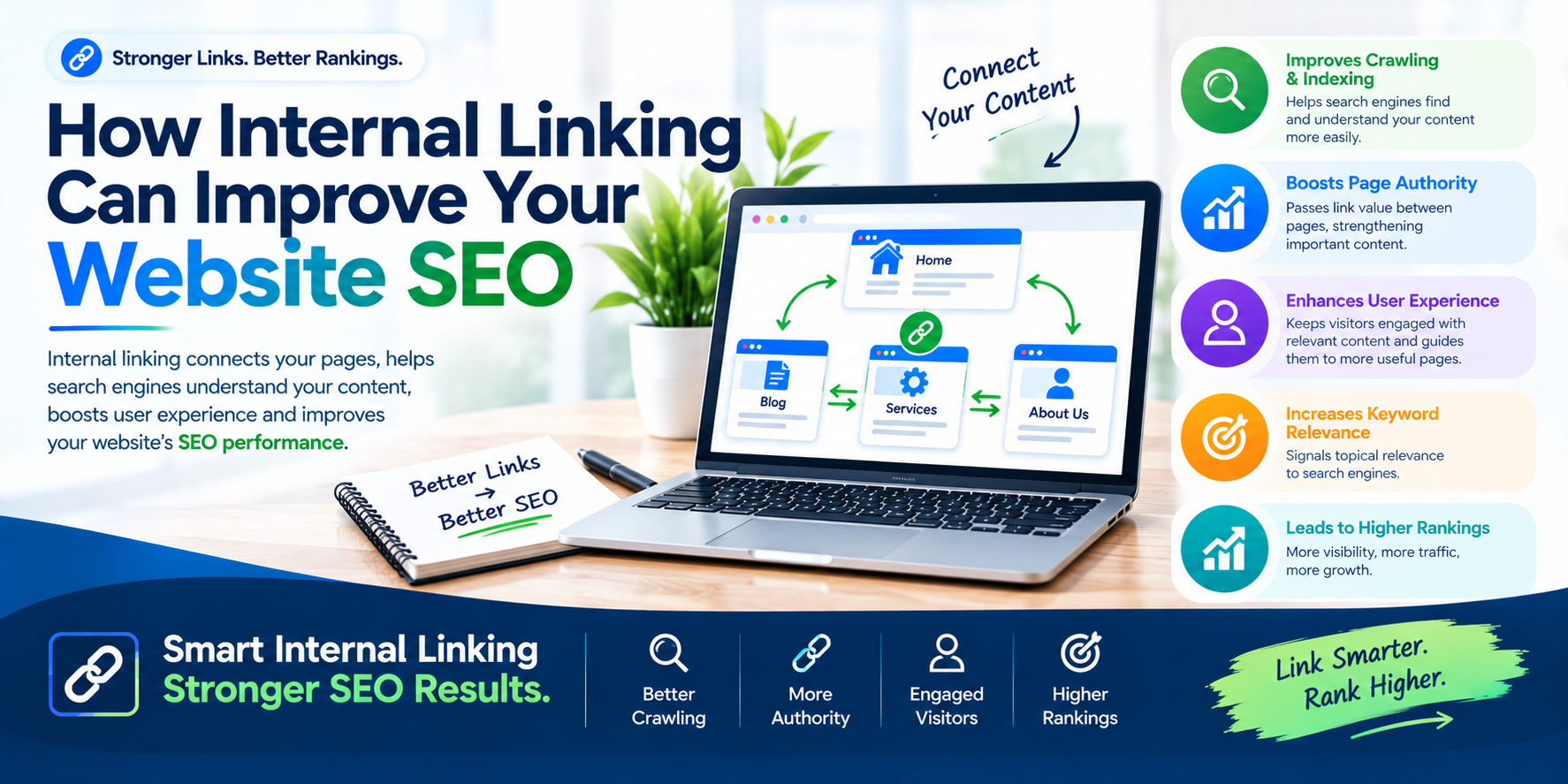
Internal linking refers to adding hyperlinks that connect one page of your website to another page on the same domain. These links help visitors explore related information and allow search engines to discover different sections of your website.
For example, if your website has a blog about digital marketing, you can link relevant phrases to your SEO services page or another article explaining keyword research.
Internal links generally fall into three categories:
- Navigational links: Links found in menus, headers, and footers.
- Contextual links: Links placed naturally within website content.
- Breadcrumb links: Links that show visitors their current position within the website structure.
Each type contributes to better website organization, usability, and search engine accessibility.
Why Is Internal Linking Important for SEO?
Internal linking creates meaningful connections between different pages of your website. These connections help search engines understand how your content is organized and which pages are related. Without proper internal links, valuable website pages may become difficult for search engines and visitors to find. This can reduce their visibility and limit opportunities to attract organic traffic.
A reliable SEO Company in Mohali can identify internal linking opportunities and create a structured linking system that improves website accessibility and supports search engine optimization.
1. Helps Search Engines Discover Your Website Pages
Search engines use automated crawlers to discover and analyze website content. Internal links provide pathways that help these crawlers move from one page to another. When important pages are connected through relevant internal links, search engines can discover them more efficiently.
For example, linking a newly published blog to an existing, frequently visited article can make the new content easier for search engines to find. However, internal links do not guarantee indexing. Pages must also meet technical requirements and search engine quality standards.
2. Improves Website Navigation and User Experience
A website should make it easy for visitors to find useful information. Internal linking supports this goal by guiding users toward related pages. Imagine a visitor reading an article about website optimization. A relevant link to another blog explaining technical SEO can help them explore the subject further.
Effective internal navigation can:
- Help visitors find relevant information.
- Reduce unnecessary searching.
- Encourage exploration of related services.
- Make the website easier to use.
A better user experience also supports business goals by helping potential customers discover valuable content and services.
3. Distributes Link Equity Across Website Pages
Link equity refers to the ranking value that links may pass between pages. Internal links help distribute this value throughout your website. Pages that attract backlinks from external websites may be able to pass some of their ranking value to other relevant pages through internal links.
For example, a popular blog with quality backlinks can link to a related service page, helping search engines understand its importance. An experienced SEO Company in Mohali can analyze website links and recommend opportunities to strengthen important pages without creating unnecessary or excessive links.
4. Helps Search Engines Understand Content Relationships
Search engines analyze links and surrounding content to understand relationships between website pages. Suppose your website contains articles about keyword research, on-page SEO, technical SEO, and content optimization. Linking these articles together creates a connected group of related information.
This structure makes it easier for search engines to recognize how different pages contribute to a broader topic. A well-organized internal linking strategy can also support topic clusters, where a main page links to detailed articles covering specific aspects of the subject.
5. Supports Better Keyword Relevance
Internal links use clickable text known as anchor text. This text provides context about the destination page. For example, linking the phrase SEO services in Mohali to a relevant service page helps users and search engines understand what they can expect from that page.
However, anchor text should always fit naturally within the content.
Avoid repeating the same exact-match keyword excessively. Instead, use descriptive variations that accurately represent the linked page. A professional SEO Company in Mohali can help businesses maintain a balanced anchor text strategy that improves clarity without keyword stuffing.
6. Helps Important Service Pages Gain Visibility
Business websites often contain important service pages that need stronger search visibility. Internal linking helps connect these pages with relevant blogs and informational content. For example, a digital marketing agency can publish articles about website optimization, local SEO, and content marketing. These articles can naturally link to appropriate service pages.
This approach creates opportunities for interested readers to explore the services your business provides. By connecting informational content with commercial pages, businesses can improve website organization while supporting lead-generation goals.
7. Reduces the Risk of Orphan Pages
Orphan pages are website pages that have no internal links pointing to them. Although these pages may still be discovered through XML sitemaps or external links, they can be difficult for visitors and search engines to reach through normal website navigation.
Regular internal linking audits help identify such pages. Once identified, relevant links can be added from existing articles, category pages, or service pages. This ensures valuable content becomes part of the website’s connected structure instead of remaining isolated.
8. Strengthens Topic Clusters and Content Strategy
Topic clusters are an effective way to organize website content around a central subject. A topic cluster generally includes a main pillar page supported by multiple related articles.
For example, an SEO pillar page might connect to articles covering:
- Keyword research techniques
- On-page SEO optimization
- Technical website improvements
- Local SEO strategies
- Internal linking best practices
These supporting articles can link back to the main pillar page and to one another when relevant.
This structure improves content organization and helps users explore a subject in greater detail.
9. Makes Older Content More Valuable
Publishing new content is important, but older blog posts can continue providing value when properly maintained. Adding internal links to existing articles helps connect older information with newly published resources.
For example, if you publish a new guide about Google Business Profile optimization, you can add relevant links from older blogs discussing local SEO. This helps readers discover updated information while improving the connection between related pages.
Regular content updates and internal linking reviews are useful components of a long-term SEO strategy.
10. Supports Better Conversion Opportunities
Internal linking is not only about search rankings. It can also help guide potential customers through their buying journey. A visitor may initially arrive on your website looking for information about SEO. After reading a helpful article, they might want to learn more about professional services.
A relevant internal link can guide that visitor toward your service page, portfolio, or contact information. An established SEO Company in Mohali can help businesses create logical pathways between informational content and service pages, supporting a smoother customer journey.
Best Practices for an Effective Internal Linking Strategy
Creating internal links requires planning. Adding links randomly or excessively may reduce their usefulness.
Follow these best practices to build an effective linking structure.
Use Descriptive Anchor Text
Choose clickable text that clearly explains the destination page. Avoid generic phrases such as “click here” when more informative wording is available.
Link to Relevant Content
Every internal link should provide additional value. Connect pages that share a meaningful relationship rather than linking unrelated articles.
Prioritize Important Pages
Identify your most valuable service pages, category pages, and informational resources. Ensure they receive appropriate internal links from relevant content.
Avoid Excessive Internal Links
There is no universal ideal number of internal links per page. Focus on usefulness and readability instead of meeting an arbitrary link count.
Use Crawlable Links
Use standard HTML links with valid destination URLs so search engines can follow them reliably.
Check for Broken Links
Regularly inspect internal links to identify broken URLs, unnecessary redirects, and outdated destinations. Fixing these issues improves navigation and website maintenance.
Common Internal Linking Mistakes to Avoid
Even well-designed websites can suffer from internal linking problems.
Some common mistakes include:
- Using the same keyword repeatedly in every anchor text.
- Linking to pages that are unrelated to the surrounding content.
- Leaving important pages without incoming internal links.
- Adding too many links in a short section.
- Linking to deleted pages or broken URLs.
- Failing to update links after changing website URLs.
Avoiding these mistakes helps maintain a clean website structure and makes internal links more useful to visitors and search engines.
How to Measure Internal Linking Performance
Monitoring your internal linking strategy helps determine whether your improvements are working. Google Search Console can provide information about internal links, indexing, and search performance. Website analytics tools can help you understand how visitors navigate between pages.
Useful factors to monitor include organic impressions, clicks, page indexing status, user navigation patterns, and conversions. You can also use SEO auditing tools to identify orphan pages, broken links, and pages buried too deeply within the website structure.
Remember that rankings and traffic depend on many factors. Internal linking improvements should be evaluated alongside content quality, technical SEO, and other optimization efforts.
How Ink Web Solutions Can Help Improve Your Website SEO
Developing an effective internal linking strategy requires a clear understanding of website architecture, content relevance, and search engine optimization. Ink Web Solutions helps businesses improve their online presence through structured SEO strategies designed around their website and business objectives.
As an SEO Company in Mohali, Ink Web Solutions focuses on improving website structure, identifying relevant internal linking opportunities, optimizing on-page content, and supporting better search visibility. Our approach emphasizes natural keyword placement, user-friendly navigation, and meaningful connections between important website pages.
By combining internal linking with broader SEO improvements, businesses can build websites that are easier to explore, manage, and optimize for long-term growth.
Conclusion
Internal linking is an essential part of a successful SEO strategy. It helps search engines discover website pages, improves navigation, strengthens content relationships, and connects valuable information with important business services. A properly planned internal linking structure can also help reduce orphan pages, support topic clusters, and make existing content more accessible.
However, the key to effective internal linking is relevance. Every link should serve a clear purpose and help visitors find useful information. If you want to improve your website structure and strengthen your search engine optimization efforts, Ink Web Solutions, a professional SEO Company in Mohali, can help you develop a practical SEO strategy focused on sustainable online growth.