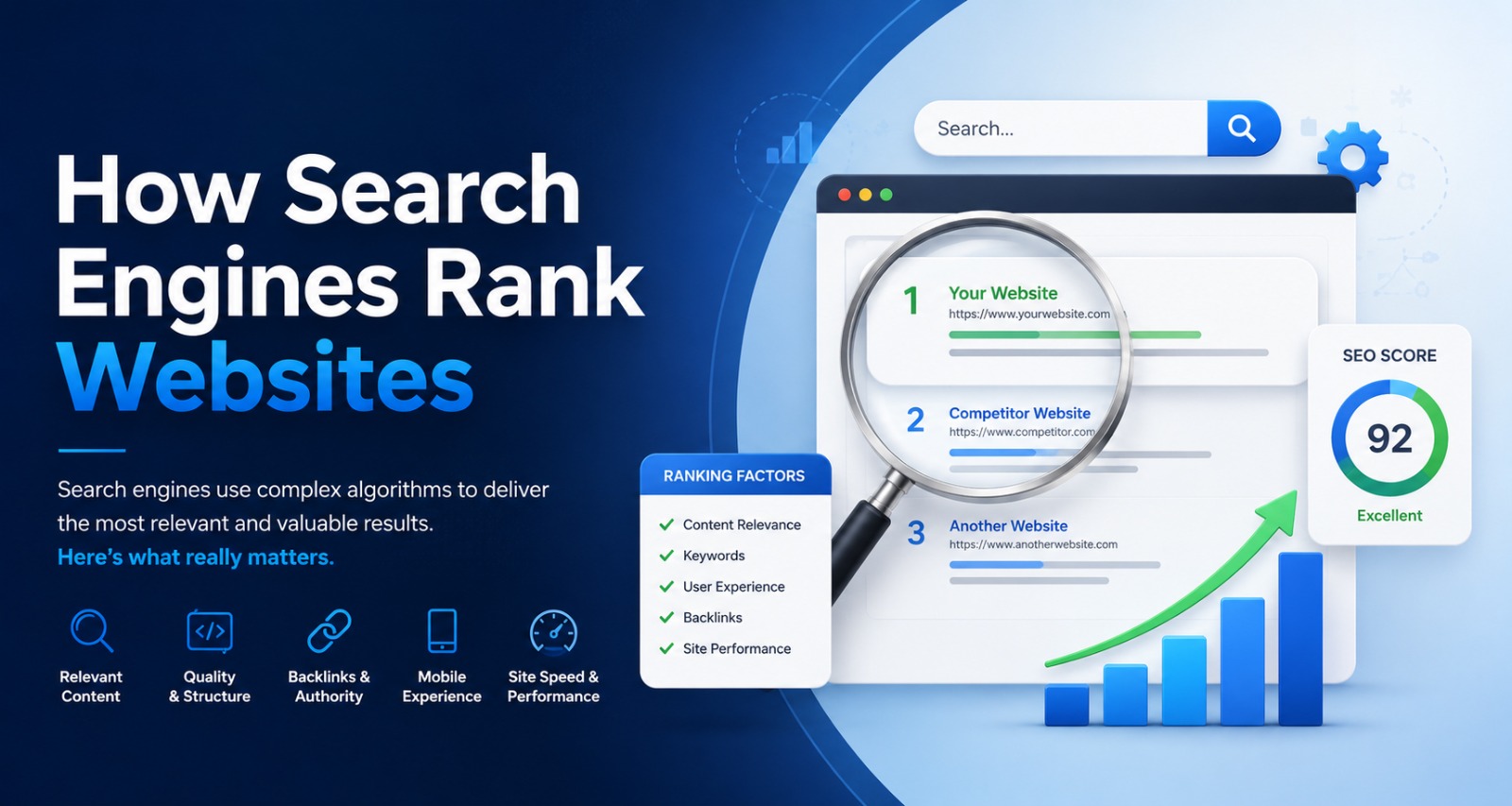
How Search Engines Rank Websites
Have you ever wondered why some websites appear at the top of Google search results while others remain difficult to find? Search engines use complex systems to evaluate websites and determine which pages are most relevant and useful for a particular search query.
For businesses, understanding how search engines rank websites is essential for building a strong online presence. A website may have excellent products or services, but without search visibility, potential customers may never discover it. This is where Search Engine Optimization (SEO) becomes important.
Search engines analyze numerous signals, including content quality, relevance, website structure, links, page experience, and technical performance. Businesses that understand these factors can create websites that are easier for search engines to understand and more valuable for users.
At Ink Web Solutions, we help businesses improve their online visibility through strategic and data-driven SEO solutions. As an experienced SEO company in Mohali, we focus on creating SEO strategies that help websites attract relevant organic traffic and achieve sustainable growth.
What Is Search Engine Ranking?
Search engine ranking refers to the position of a webpage in search engine results for a particular query.
For example, if a user searches for “best SEO services,” Google analyzes many relevant webpages and determines which results are most useful for that search.
The pages considered most relevant and helpful may appear near the top of the organic search results.
Higher rankings generally provide greater visibility and can help businesses attract more visitors, leads, and potential customers.
How Do Search Engines Work?
Before understanding ranking, it is important to know the three basic stages search engines use to process websites:
- Crawling
- Indexing
- Ranking
Let’s look at each stage in detail.
1. Crawling
Search engines use automated programs called crawlers, spiders, or bots to discover webpages across the internet.
These crawlers follow links from existing pages to discover new or updated content.
During crawling, search engines can discover information such as:
- Page content
- Internal links
- Images
- URLs
- Structured data
- Website structure
If search engine crawlers cannot access important pages, those pages may have difficulty appearing in search results.
How to Improve Crawlability
Website owners can improve crawlability by:
- Creating a logical website structure
- Using internal links
- Maintaining an XML sitemap
- Fixing broken links
- Avoiding unnecessary redirects
- Ensuring important pages are accessible
2. Indexing
After discovering a webpage, search engines analyze and store information about that page in their index.
This process is known as indexing.
During indexing, search engines attempt to understand:
- What the page is about
- What topics it covers
- Which search queries it may be relevant to
- How the page relates to other content
If a page isn’t properly indexed, it generally won’t appear in organic search results.
Website owners should regularly monitor indexing using tools such as Google Search Console to identify potential problems.
3. Ranking
Once a user enters a search query, search engines analyze their index and determine which pages are most relevant.
The ranking process considers numerous signals to provide the most useful results.
This is why SEO involves much more than simply adding keywords to a webpage.
Major Factors That Influence Search Rankings
Although search engine algorithms are complex and constantly evolving, several important areas consistently matter when optimizing a website.
1. Content Relevance
Search engines want to provide users with content that directly addresses their search query.
Your content should clearly explain the topic and provide useful information rather than simply repeating keywords.
For example, an article about technical SEO should discuss relevant subjects such as:
- Crawling
- Indexing
- Website speed
- Mobile optimization
- Structured data
- Technical errors
Relevant and comprehensive content gives search engines more context about your webpage.
2. Search Intent
Search intent refers to the reason behind a user’s search.
A user may be looking to:
- Learn something
- Find a specific website
- Compare products or services
- Make a purchase
Successful SEO strategies create content that matches the user’s intent.
For example, someone searching “what is technical SEO?” is likely looking for educational information, while someone searching “SEO company in Mohali” may have commercial intent.
Understanding intent helps businesses create pages that satisfy what users actually want.
3. Quality of Content
High-quality content is an important part of SEO.
Useful content should be:
- Original
- Accurate
- Relevant
- Well-structured
- Easy to understand
- Helpful to the target audience
Instead of writing content simply to include keywords, businesses should focus on answering questions and solving problems.
4. Keyword Optimization
Keywords help search engines understand the topics covered by a webpage.
Effective keyword optimization involves using relevant terms naturally in places such as:
- Page titles
- Headings
- Main content
- URLs
- Image alt text
- Meta descriptions
- Internal links
However, excessive keyword repetition can make content difficult to read.
The goal should always be natural and meaningful keyword usage.
5. Website Structure
A well-organized website makes it easier for both visitors and search engines to navigate.
A strong website structure should include:
- Clear navigation
- Logical categories
- Descriptive URLs
- Relevant internal links
- Proper heading hierarchy
Important pages should not be buried deep within the website.
6. Mobile Friendliness
People access websites from smartphones, tablets, laptops, and desktop computers.
A mobile-friendly website automatically adapts to different screen sizes and provides a consistent experience.
Important mobile optimization practices include:
- Responsive design
- Readable text
- Easy navigation
- Properly sized buttons
- Fast loading
- Mobile-friendly layouts
A poor mobile experience can negatively affect user satisfaction and overall website performance.
7. Website Speed
Users expect websites to load quickly. Slow pages can lead to frustration and visitors leaving before interacting with the content.
Website performance can be improved by:
- Compressing images
- Optimizing code
- Reducing unnecessary scripts
- Using efficient hosting
- Implementing caching
- Improving server response times
A faster website provides a better experience and supports overall SEO performance.
8. Core Web Vitals
Core Web Vitals are metrics used to assess important aspects of page experience.
They focus on:
- Loading performance
- Responsiveness
- Visual stability
Optimizing these areas helps create a smoother experience for website visitors.
Businesses should regularly monitor website performance and address significant issues when they occur.
9. Backlinks and Website Authority
Backlinks are links from other websites pointing to your website.
Quality backlinks can help establish authority and credibility.
However, not every backlink has the same value.
Businesses should focus on earning relevant links from reputable sources rather than creating large numbers of low-quality or spammy links.
Effective link-building strategies may include:
- Publishing useful resources
- Digital PR
- Industry partnerships
- Guest contributions
- Creating original research
- Producing shareable content
10. User Experience
Search engines aim to provide results that satisfy users.
A website should therefore be easy to use and navigate.
Good user experience includes:
- Clear navigation
- Readable content
- Fast loading
- Mobile responsiveness
- Helpful information
- Simple conversion paths
When visitors can easily find what they need, they are more likely to engage with the website.
11. Technical SEO
Technical SEO ensures that the technical foundation of a website supports search engine crawling, indexing, and performance.
Important technical SEO elements include:
- XML sitemap
- Robots.txt
- Canonical tags
- HTTPS
- Structured data
- Website speed
- Mobile optimization
- Crawlability
- Indexing
- Redirect management
A technically healthy website gives search engines a better opportunity to understand and access its content.
12. Internal Linking
Internal links connect different pages on your website.
For example, a blog about SEO could link naturally to a related service page or another educational article.
Internal linking can help:
- Search engines discover pages
- Users find related information
- Establish website hierarchy
- Distribute authority across pages
A strategic internal linking structure can strengthen overall website architecture.
13. Fresh and Updated Content
Some topics require regular updates because information can change over time.
Updating existing content can involve:
- Adding new information
- Removing outdated details
- Improving readability
- Adding relevant keywords
- Updating statistics
- Strengthening internal links
Regular content maintenance helps keep pages useful and relevant.
14. Local SEO Signals
For businesses serving specific geographic areas, local SEO is particularly important.
Local optimization may involve:
- Location-specific service pages
- Google Business Profile optimization
- Consistent business information
- Customer reviews
- Local citations
- Relevant local backlinks
For example, businesses targeting customers in Mohali can create useful content around services and topics relevant to the local market.
This allows them to improve visibility for location-based searches.
Why SEO Is a Long-Term Strategy
SEO does not usually produce sustainable results overnight. Search engines need time to crawl pages, evaluate content, understand authority, and observe changes.
A successful SEO strategy requires continuous:
- Keyword research
- Content optimization
- Technical improvements
- Link building
- Performance monitoring
- Competitor analysis
Consistent optimization can help businesses build stronger organic visibility over time.
Common SEO Mistakes That Can Hurt Rankings
Businesses often make mistakes that prevent their websites from reaching their full potential.
Some common problems include:
- Keyword stuffing
- Duplicate content
- Slow website speed
- Poor mobile experience
- Broken links
- Poor website structure
- Low-quality backlinks
- Ignoring search intent
- Missing technical SEO
- Publishing content without research
Identifying and fixing these issues is an important part of maintaining SEO performance.
How Ink Web Solutions Helps Businesses Improve Rankings
Achieving strong search visibility requires a combination of technical knowledge, content strategy, keyword research, and continuous optimization.
Ink Web Solutions provides customized SEO solutions designed around individual business objectives. As a professional SEO company in Mohali, we help businesses strengthen their websites and improve their organic search presence.
Our SEO services include:
- Keyword research
- On-page SEO
- Technical SEO
- Local SEO
- Content optimization
- Competitor analysis
- Link-building strategies
- Website SEO audits
- Google Business Profile optimization
- SEO performance tracking
Our approach focuses on creating sustainable SEO improvements rather than relying on shortcuts or manipulative techniques.
Best Practices for Better Search Rankings
Website owners can strengthen their SEO foundation by following these practices:
Create Helpful Content
Write content that genuinely answers user questions and provides useful information.
Understand Search Intent
Know what users expect when they search for a particular keyword.
Optimize Website Performance
Keep your website fast, responsive, secure, and easy to navigate.
Build Quality Links
Focus on earning relevant backlinks from trustworthy websites.
Improve Technical SEO
Regularly check crawling, indexing, redirects, structured data, and other technical elements.
Monitor Performance
Use SEO analytics and search performance data to identify opportunities for improvement.
Conclusion
Search engines rank websites by evaluating numerous signals to determine which pages are most relevant and useful for a particular search. The process begins with crawling and indexing before search engines evaluate factors such as content relevance, search intent, website performance, backlinks, technical SEO, mobile usability, and user experience.
For businesses, understanding these fundamentals is the first step toward building a successful SEO strategy. Rather than focusing on a single ranking factor, website owners should take a comprehensive approach that combines valuable content, technical excellence, strong website architecture, and a positive user experience.
If you want to improve your website’s visibility and attract more qualified organic traffic, working with an experienced SEO company in Mohali can help you develop a strategy suited to your business goals. Ink Web Solutions combines technical expertise, content optimization, keyword research, and data-driven SEO strategies to help businesses build stronger online visibility and achieve sustainable digital growth.