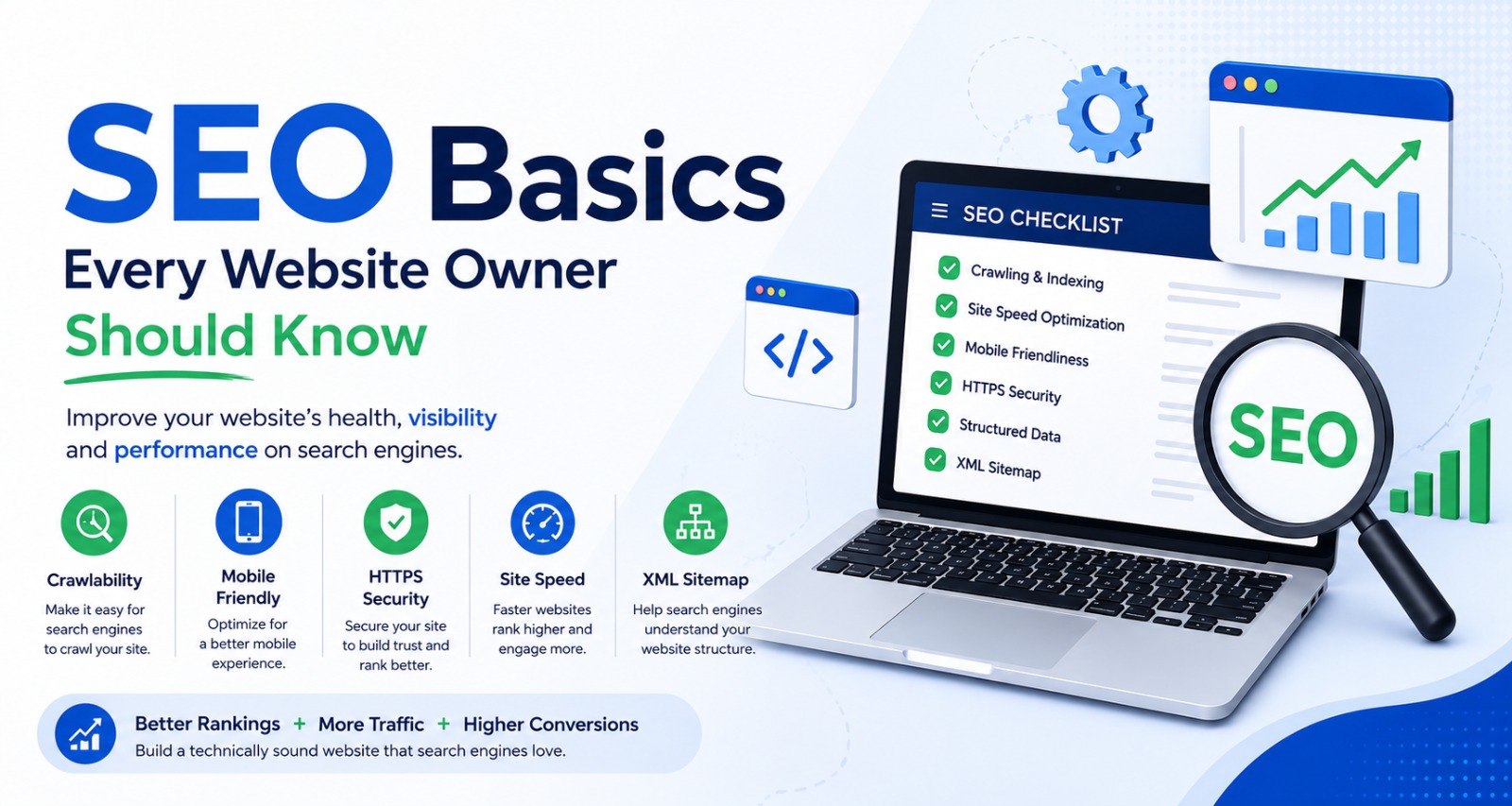
Technical SEO Basics Every Website Owner Should Know
A visually appealing website and high-quality content are essential for online success, but they alone are not enough to achieve top search engine rankings. Behind every high-performing website is a strong technical foundation that allows search engines to crawl, index, and understand its content efficiently. This foundation is known as Technical SEO. Technical SEO focuses on optimizing the infrastructure of a website to improve its performance, usability, and search engine visibility. It ensures that search engines like Google can access your pages without issues while providing visitors with a fast, secure, and seamless browsing experience.
Many website owners focus only on keywords and content while overlooking technical aspects that directly impact rankings. Ignoring these elements can limit your website’s ability to perform well in search results, no matter how valuable your content may be.
At Ink Web Solutions, we help businesses build technically sound websites that meet modern SEO standards. As a trusted SEO company in Panchkula, we implement proven technical SEO strategies that improve website performance, enhance user experience, and support long-term organic growth.
What Is Technical SEO?
Technical SEO refers to the process of optimizing a website’s technical elements so search engines can crawl, index, and rank it effectively. Unlike on-page SEO, which focuses on content and keywords, technical SEO improves the backend structure and overall performance of a website.
Its primary goal is to make your website accessible, secure, fast, and easy for both users and search engines to navigate.
Why Technical SEO Matters
Technical SEO plays a critical role in your website’s overall success. Even the best content may struggle to rank if technical issues prevent search engines from accessing it properly.
Benefits of technical SEO include:
- Better search engine rankings
- Faster website loading times
- Improved user experience
- Higher crawl efficiency
- Better mobile usability
- Increased organic traffic
- Stronger website security
- Lower bounce rates
A technically optimized website provides a solid foundation for all other SEO efforts.
1. Website Crawlability
Search engines use automated bots, often called crawlers or spiders, to discover pages on your website. If these bots cannot access your content, your pages may never appear in search results.
How to Improve Crawlability
- Maintain a clear website structure.
- Fix broken links.
- Use internal linking effectively.
- Keep important pages within a few clicks of the homepage.
- Avoid unnecessary redirect chains.
Good crawlability ensures search engines can find and understand all valuable pages.
2. Proper Website Indexing
Crawling and indexing are different processes. After Google crawls your pages, it decides whether they should be added to its search index.
Pages that are not indexed cannot rank.
Improve Indexing By:
- Submitting an XML sitemap.
- Removing duplicate pages.
- Using canonical tags correctly.
- Avoiding accidental “noindex” directives.
- Publishing original, high-quality content.
Regular indexing checks help ensure important pages remain visible.
3. XML Sitemap
An XML sitemap acts as a roadmap for search engines by listing the important pages on your website.
Benefits include:
- Faster page discovery
- Improved crawling
- Better indexing of new content
Whenever you publish new pages, update your sitemap and submit it through Google Search Console.
4. Robots.txt File
The robots.txt file tells search engine crawlers which pages they can or cannot access.
A properly configured robots.txt file helps:
- Prevent indexing of unnecessary pages
- Improve crawl efficiency
- Protect sensitive directories
Be careful not to block important pages by mistake.
5. Website Speed Optimization
Website speed is both a ranking factor and a user experience factor. Slow websites often experience higher bounce rates and lower conversions.
Ways to Improve Speed
- Compress images
- Minify CSS and JavaScript
- Enable browser caching
- Use a Content Delivery Network (CDN)
- Choose reliable hosting
- Reduce unnecessary plugins
A fast website improves visitor satisfaction and supports better SEO performance.
6. Core Web Vitals
Core Web Vitals measure how users experience your website. Google uses these metrics to evaluate page performance.
The three primary metrics are:
Largest Contentful Paint (LCP)
Measures loading speed.
Interaction to Next Paint (INP)
Measures responsiveness to user interactions.
Cumulative Layout Shift (CLS)
Measures visual stability during page loading.
Optimizing these metrics leads to a smoother browsing experience and improved rankings.
7. Mobile-Friendly Design
Most searches now happen on mobile devices, making responsive design essential.
A mobile-friendly website should:
- Adapt to different screen sizes
- Load quickly
- Use readable fonts
- Have touch-friendly navigation
- Display content correctly on all devices
Google primarily evaluates the mobile version of your website for ranking purposes.
8. Secure Website (HTTPS)
Website security builds trust with both users and search engines.
Installing an SSL certificate enables HTTPS encryption, which protects user data and improves credibility.
Benefits include:
- Better security
- Increased user trust
- Improved SEO performance
- Protection against data interception
HTTPS has become a standard requirement for modern websites.
9. URL Structure
Simple, descriptive URLs help both users and search engines understand page content.
Example of a good URL:
yourwebsite.com/technical-seo-basics
Best practices include:
- Keep URLs short
- Use relevant keywords naturally
- Avoid unnecessary numbers and symbols
- Use hyphens between words
A clean URL structure supports better indexing and user experience.
10. Internal Linking
Internal links connect related pages across your website.
They help:
- Distribute page authority
- Improve navigation
- Increase time spent on site
- Assist search engine crawling
Linking blogs, service pages, and important resources strengthens your website architecture.
11. Fix Broken Links
Broken links create a poor user experience and waste crawl resources.
Regularly check your website for:
- 404 errors
- Broken internal links
- Broken external links
- Incorrect redirects
Fixing these issues keeps your website healthy and user-friendly.
12. Structured Data (Schema Markup)
Schema markup helps search engines understand your content more effectively.
It can enhance search listings with rich results such as:
- Reviews
- FAQs
- Business information
- Products
- Events
Structured data increases visibility and can improve click-through rates.
13. Duplicate Content
Duplicate content can confuse search engines and reduce your ranking potential.
Avoid duplication by:
- Writing unique content
- Using canonical tags
- Redirecting duplicate URLs
- Managing URL parameters correctly
Original content provides better value for users and search engines alike.
14. Regular Technical SEO Audits
Technical SEO is not a one-time task. Websites should be audited regularly to identify and resolve issues before they affect rankings.
A technical SEO audit should include:
- Crawl errors
- Indexing status
- Website speed
- Mobile usability
- Broken links
- Security checks
- Sitemap validation
- Structured data testing
Routine audits help maintain optimal website performance.
Common Technical SEO Mistakes
Many websites lose valuable traffic due to avoidable technical issues, including:
- Slow page speed
- Missing XML sitemap
- Incorrect robots.txt configuration
- Broken internal links
- Duplicate content
- Poor mobile experience
- Missing HTTPS
- Redirect loops
- Large, unoptimized images
- Outdated plugins or software
Addressing these problems early prevents long-term SEO issues.
Why Technical SEO Supports Business Growth
Technical SEO improves more than just search rankings. It creates a better overall website experience, which can lead to:
- Increased organic traffic
- Higher user engagement
- Better conversion rates
- Improved customer trust
- Stronger online visibility
- Sustainable business growth
A technically optimized website forms the backbone of a successful digital marketing strategy.
Why Choose Ink Web Solutions?
Technical SEO requires expertise, precision, and ongoing monitoring. At Ink Web Solutions, we provide comprehensive technical SEO services designed to help businesses build a strong online foundation.
As an experienced SEO company in Panchkula, we focus on improving website performance through technical optimization, ensuring your site meets Google’s latest best practices.
Our technical SEO services include:
- Comprehensive SEO audits
- Website speed optimization
- XML sitemap creation
- Robots.txt optimization
- Mobile optimization
- HTTPS implementation
- Core Web Vitals improvement
- Structured data integration
- Crawl and indexing optimization
- Ongoing performance monitoring
Our goal is to help businesses improve search visibility while delivering an exceptional experience for every visitor.
Best Practices for Technical SEO
To keep your website technically optimized:
- Monitor website performance regularly.
- Submit updated XML sitemaps.
- Fix crawl and indexing errors promptly.
- Improve Core Web Vitals.
- Ensure mobile responsiveness.
- Optimize images and scripts.
- Maintain HTTPS security.
- Use structured data where appropriate.
- Repair broken links and redirects.
- Perform regular technical SEO audits.
Following these practices will help your website remain competitive in search results.
Conclusion
Technical SEO is the foundation of every successful SEO strategy. While quality content and effective keywords attract visitors, technical optimization ensures that search engines can discover, understand, and rank your website efficiently. From improving website speed and mobile responsiveness to managing crawlability, indexing, and security, every technical element contributes to better search performance and user satisfaction.
If you’re looking to strengthen your website’s technical foundation, partnering with a professional SEO company in Panchkula can make a significant difference. Ink Web Solutions combines technical expertise, SEO best practices, and data-driven strategies to help businesses improve rankings, enhance website performance, and achieve sustainable online growth. By investing in technical SEO today, you create a stronger, more reliable digital presence for the future.